
A client almost never leaves overnight. First they miss a session, then another, then they take longer to reply, and one day they tell you things are complicated right now. At every step there was a moment when a message from you could have made a difference.
The trouble is that with 20, 50 or 150 people you can't watch everyone. Looking after the people you already have usually costs less than finding new ones, so it pays to have a method. This one is simple, and it works the same for a coach as for a gym.
They leave a little at a time.
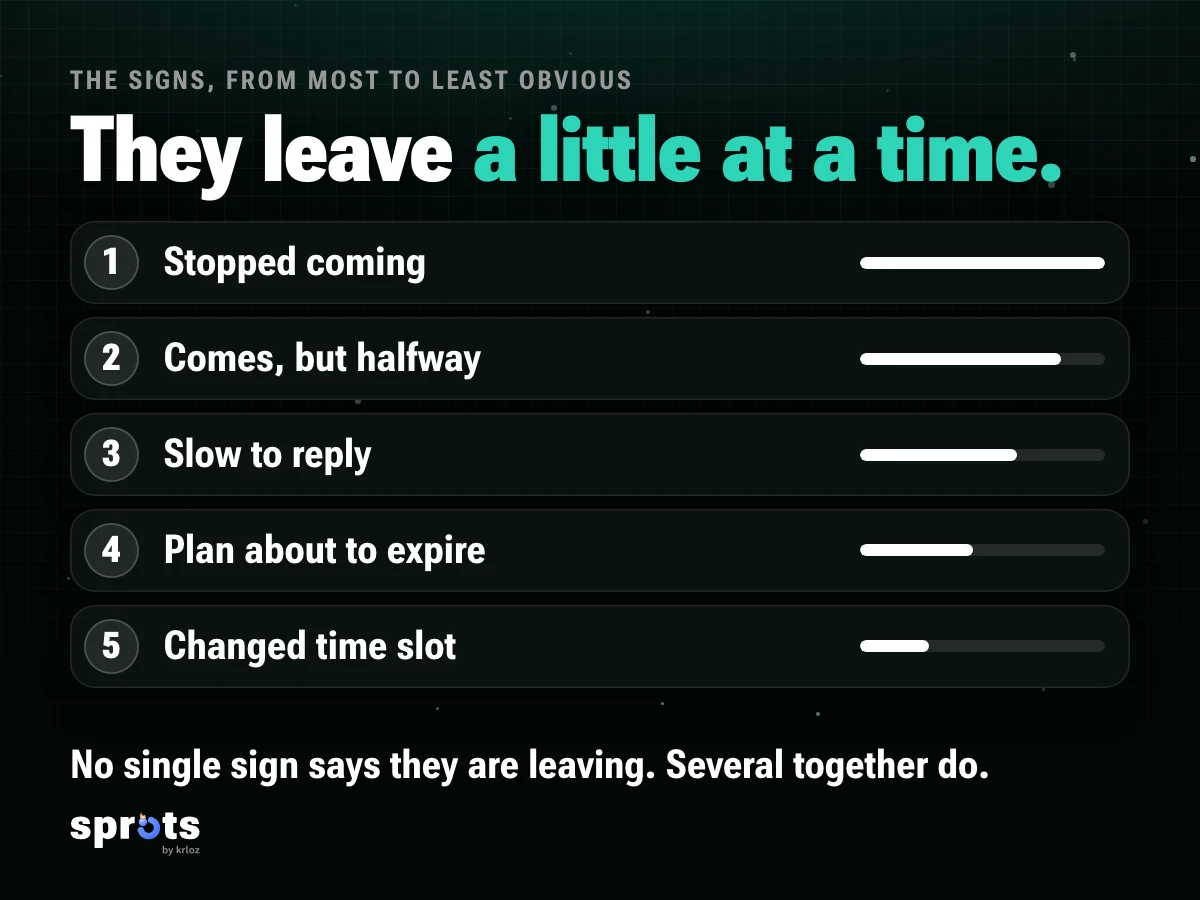
These are the signs that tend to show up, from most obvious to least:
- They stopped coming. Weeks without a visit, or they often miss what they booked.
- They come, but halfway. They arrive late, cut sessions short or do less than they were meant to.
- They take longer to answer. They used to reply right away; now your messages sit unread.
- Their plan is about to expire or is overdue. Sometimes they aren't leaving the gym, they're leaving the bill.
- They changed their time slot without telling you. They're still around, but they no longer overlap with you.
No single sign says they're leaving. Several together do.
Three groups, not fifty names.
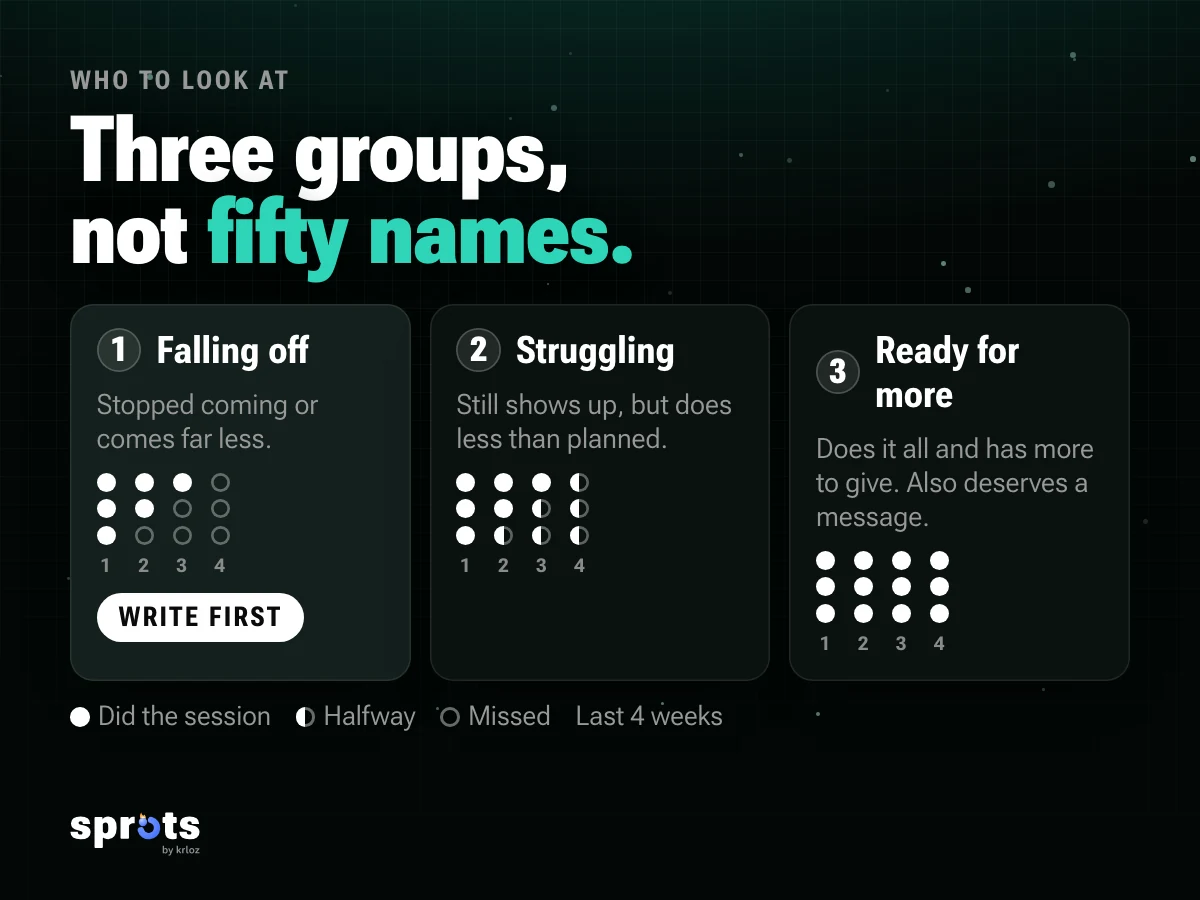
Instead of checking everyone, sort people into three groups and look only at those:
- Falling off. They stopped coming or come far less than before. This is the first group to write to.
- Struggling. They still show up but do less than planned: they come up short on sets, shorten sessions or arrive more and more worn out.
- Ready for more. They complete everything and have something left over. They deserve a message too: nobody wants to feel invisible for doing well.
If you don't have a system today, a spreadsheet is enough to start. One column with the last date each person came, sorted from oldest to newest, already puts the first group at the top.
How to write.
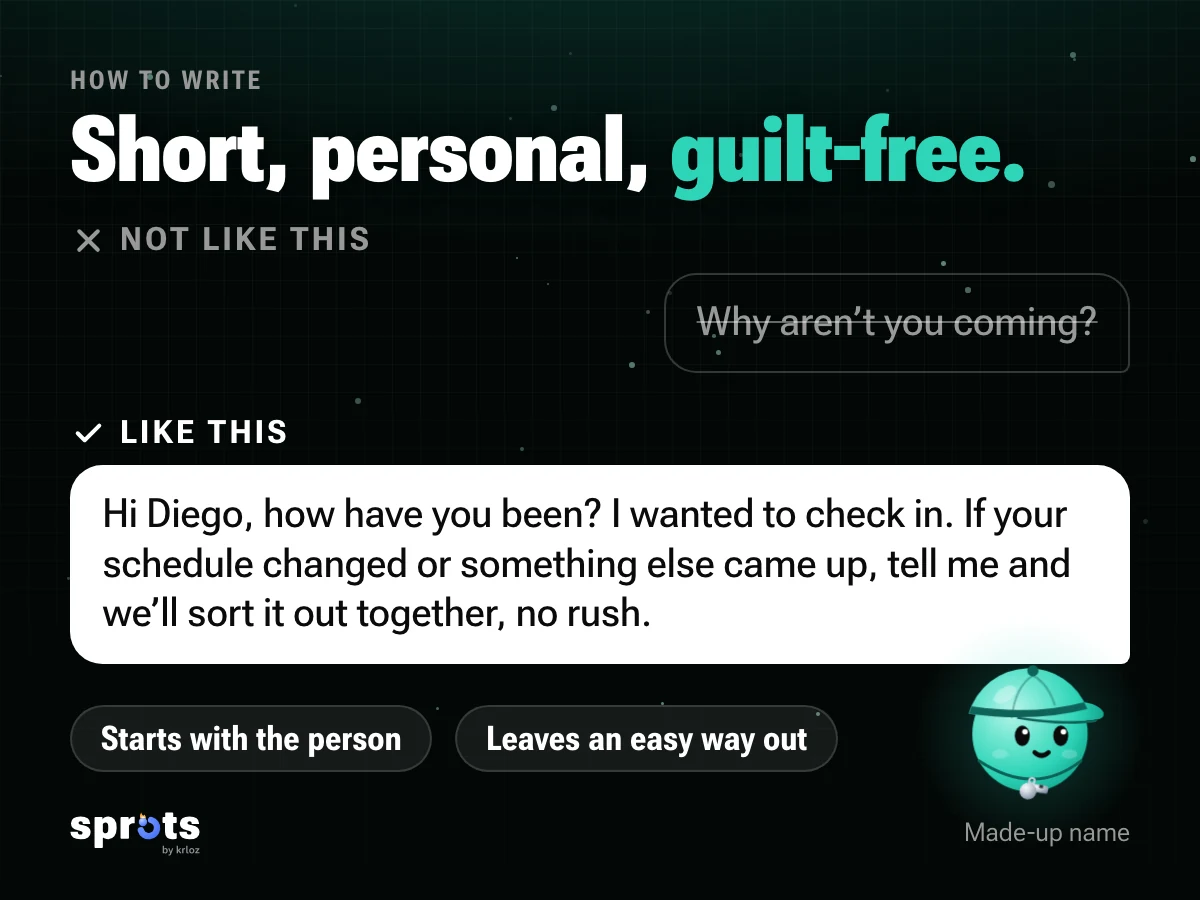
Short, personal and guilt-free. The message doesn't ask "why aren't you coming?"; it opens a door. Three examples, with made-up names:
To someone who stopped coming. "Hi Diego, how have you been? I wanted to check in. If your schedule changed or something else came up, tell me and we'll sort it out together, no rush."
To someone who's struggling. "Hi Sofia, this week looked heavy. How did it feel? If you want, we can talk about what to adjust."
To someone doing well. "Hi Matt, I've seen how consistent you've been. How are you feeling? Whenever you want, we can talk about what's next."
Notice what they share: they start with the person, not the absence, and they leave an easy way to answer.
If they reply that something hurts, that they don't feel well or that the tiredness doesn't go away with rest, don't push them to train: listen without judging and suggest they see a health professional.
Twenty minutes, once a week.
Consistency matters more than the perfect message. Pick a fixed moment (Monday morning, say), open your three groups and write to the ones who need it. Five to ten messages a week is already looking after the people who most need it.
A routine you can actually keep looks like this:
- Open the list and look first at the people who are falling off.
- Pick between five and ten people, no more. If there are more, the ones who've been away longest go first.
- Write each one a different message, two or three lines long.
- Note who you wrote to and the date, so you don't repeat yourself or forget anyone.
Also note who replied and who didn't. If someone doesn't answer, don't send three messages in a row: send one, then wait a week.
What doesn't work.
- Sending everyone the same text. People notice, and it feels like a mass message.
- Asking for money in the same message where you ask how they are. Keep the two conversations apart.
- Comparing them with other clients. It never helps.
- Making them feel guilty for missing. Resting isn't failing: sometimes a pause is what a person needs to come back.
- Fighting to keep them. Sometimes they leave for reasons that have nothing to do with you: a new job, a move. Respecting that is also a way of caring.
If they leave anyway.
Ask one thing: "Is there anything you would have changed?" Write down what they say. It teaches you more than any survey, and it keeps the door open: their place is still there if they want to come back.
If they tell you they left because of pain or an injury, don't improvise: they should see a health professional, and you resume when that professional says so.
General advice for healthy people. Sprots does not replace the guidance of a health professional.
And Sprots.
When you open the app, Sprots shows you who to look at today, based on what you set up for each person and what they did with it: who's falling off, who's struggling and who's ready for more. It's for coaches and for gyms. Coming soon to the App Store and Google Play. Tell me when it launches →